EXPERIENCE / APPROACH
Design doesn’t stop at the shop floor.
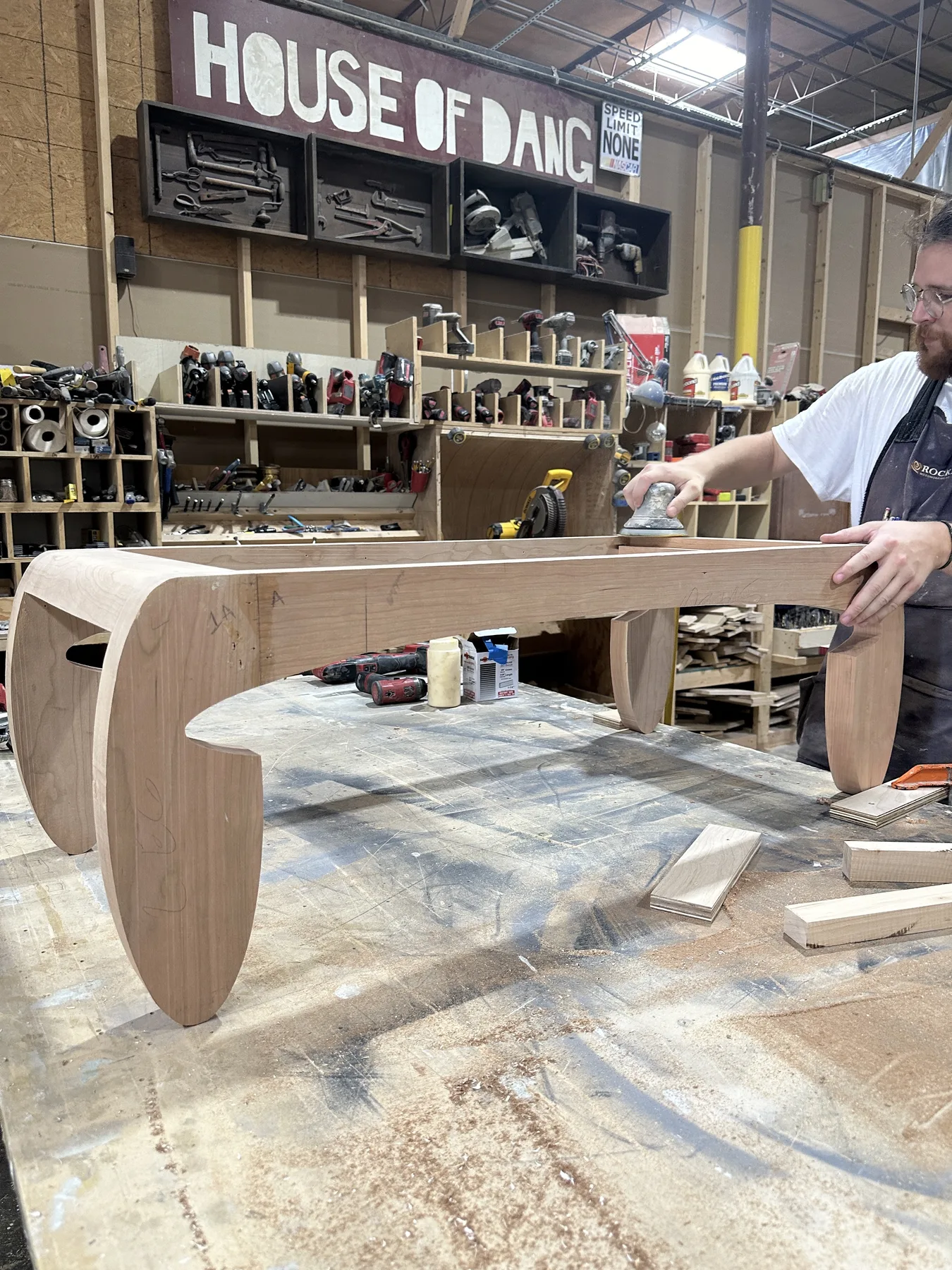
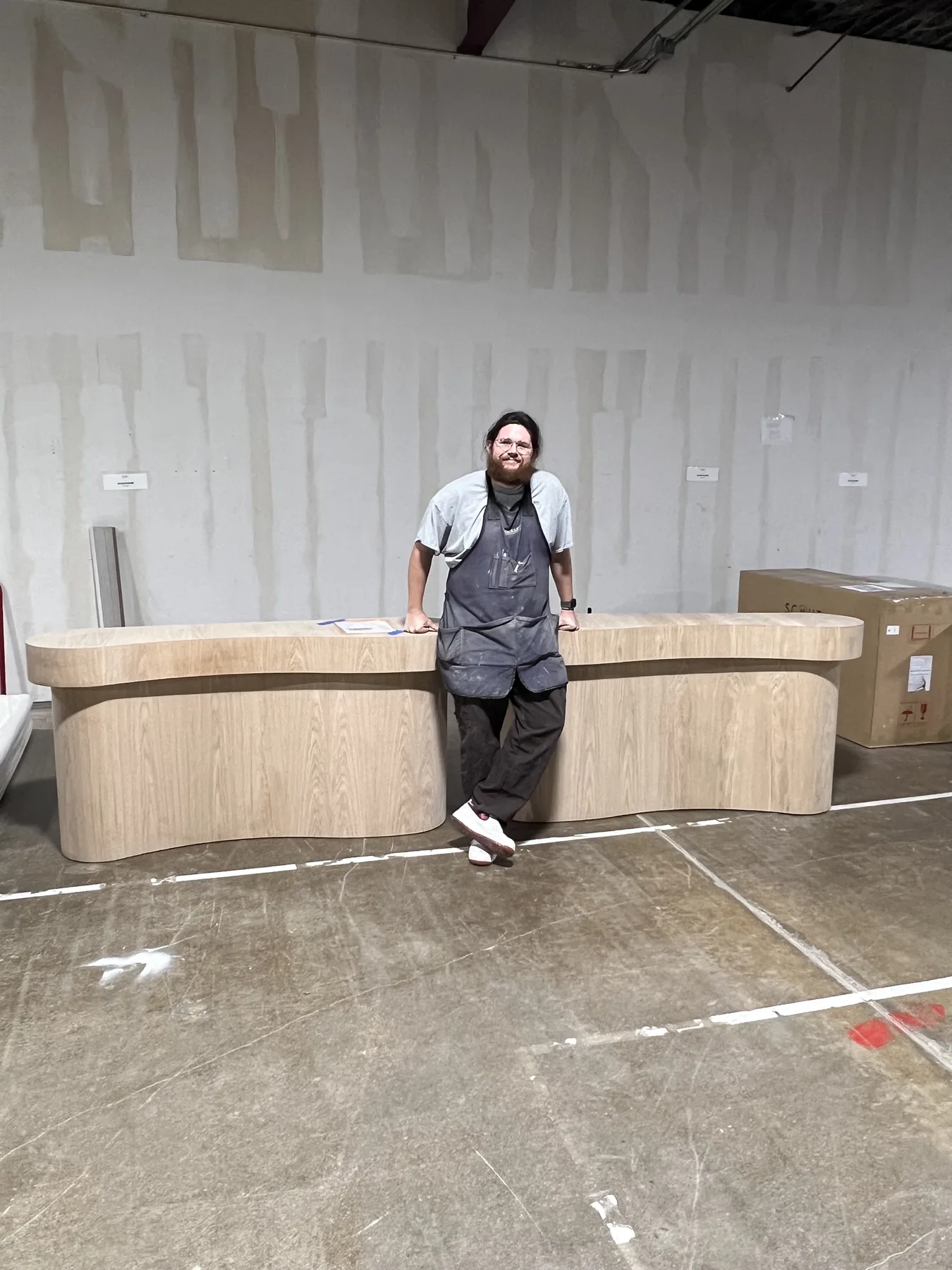
My background spans highly custom furniture fabrication, product development, and CNC programming. I cut my teeth in the industry at Scout Design Studio. There, I worked first to assemble and veneer custom commissions. After being promoted, I designed and developed upholstered frames, casework, and other hard goods. I produced CAD models, production drawings, and CNC programs. Currently, at InProduction Dallas, I work in scenic fabrication, CNC router machining, industrial maintenance troubleshooting, and production workflows.
I’ve used AutoCAD, SolidWorks, Fusion 360, Vectorworks, EnRoute, and any other CAD or CAM software that has been required for getting a job out the door. I’ve also used Python, AutoLISP, and ELisp for workflow automation.
I’m interested in roles that connect CAD and product development with practical manufacturing decisions.
01 / THE NAME
Working like a billy-o.
Billy-O is an old British expression for “a lot” of something that originated from a steam engine. When I think of working like a freight train, I think of my late grandfather, Joe Billy. I have countless things to thank him for, but his example of hard work is my proudest inheritance.
02 / THE FOUNDATION
Tools and Tinkering
My father and grandfather taught me how to use hand and power tools. We would do small remodeling projects and tinker with toys or other small projects. I grew up on a farm—and for most of my teens, I did farm work during the summer. I learned to work hard, and sometimes to work smart.
03 / THE PRACTICE
Gemini: Design and Fabrication
My early interest in making things precipitated into a strong interest in furniture and design after I dropped out of college. Despite being out of school without a degree to show for it, I worked hard and studied harder. Except this time, I studied shop tours, stationary tools, furniture design, and building techniques. I worked in remodeling to touch tools again and make extra scratch. When I moved to Dallas, I got my first job as a helper in a scenic shop—and the rest has flowed from there.
Billy-O is a continuation of that early studying, backed by what I’ve learned in hands-on, professional execution. Sometimes that may mean I’m working with something as big and vague as “I need a console table.” Sometimes it could be “How the hell am I going to fabricate that radius?” My learning hasn’t stopped after I read a dozen tool manuals or after I thumbed the pages of 1000 Chairs or after I traced the pieces from Complete Kagan. The resources are just different now, like Singer catalogs, or reading manual pages in Emacs.